22-Day Becoming Better Challenge

For the Month of April, we are having a Nationwide contest that we calling our "22-Day Becoming Better Challenge". This will be an opportunity for technicians across the country to compete against each other focused on who can have the biggest month over month improvement. We want all to focus on Becoming Better, so the contest is focused on crowning the "Champion" of which technician has the greatest percentage of increase of revenue and Opportunity Job average from April compared to March. Not only are they competing against each other, but they are also trying to one up themselves from the previous month. The winner will get a $500 Home Depot Gift Card and a Championship Belt.
We want the Best Reps in on the action as well. The focus for the Best Reps during the 22-day Challenge is they will be focused on increasing the number of opportunities. The location/Best Rep that can have the biggest month over month increase in opportunities will also be crowned the champion. They will win a $500 Amazon Gift Card and the office team will get a catered lunch from the corporate team.
There is a slight catch to this. We all know that we don't get better just by trying harder. We must also train to Become Better. So, all 22 working days in the month of April, the Best Techs will be required to complete the 22 Day Challenge Game of the Day inside 1Huddle. Each morning, they will need to complete the specified Game for that day. This will need to continue every day for the month to help them grow and Become Better. The Best Reps will also have to do the same but the content will be specific to their role.
To play, we need you to register your team by completing this short form: https://elevate.clickup.com/forms/2314961/f/26mph-150197/2GM0RKXAQNCQQQ0AB8
For all the details you can also visit the page in the Digital Ops Manual: 22 Day Becoming Better ChallengePage
Who can be the 22-Day Challenge Champion?? Let's GO!
Stronger Foundations: Our Partnership with Reece
When it comes to running a high-performing location, consistency matters. Consistency in service, pricing, product availability, and support. That’s exactly why we’ve partnered with Reece as a key supplier across our system.
This isn’t just about where you buy parts. It’s about building a stronger, more reliable operation from the ground up.
Where Reece Operates and Why It Matters
Reece does not operate nationwide. Instead, they have a strong and growing presence across key markets, including:
- Arizona
- California
- Georgia
- Nevada
- New Mexico
- North Carolina
- Oklahoma
- South Carolina
- Texas
This regional strength is important. In the markets where they operate, Reece brings a well-established branch network, deep inventory, and contractor-focused support that aligns well with how our locations run.
For 11 locations within these regions, this partnership creates a meaningful advantage.
Why Reece Matters to Our System
Where Reece is present, they provide a level of consistency and support that helps our locations perform at a higher level.
Here’s what that looks like in practice:
- Product Availability You Can Count On
Access to the parts and equipment you need, when you need them. Less downtime, fewer delays, and more completed jobs. - More Predictable Cost Structure
Working within a system partnership helps create more consistency across locations, allowing you to plan and price work with greater confidence. - Strong Local Relationships
Reece branches are built to support contractors. When you walk in, you’re not just another transaction, you’re part of a broader partnership. That means better service, faster problem-solving, and a team that understands your business. - Support Beyond the Counter
From product knowledge to sourcing hard-to-find items, Reece plays a role in helping your team stay efficient and informed in the field.
A System-Level Advantage
Partnerships like this are designed to create leverage across the entire franchise system, not just individual locations. Even though Reece shares a physical location with about 42% of our system, this partnership can help with securing tools and materials at a discounted rate for future locations that have yet to open through packout programs that are aligned with key manufacturing partners.
When we align around strong suppliers, we create:
- More consistency in how work is performed
- Better alignment between field teams and office teams
- Stronger positioning with national and regional customers
- A more professional and scalable operation overall
This is how we move from being a collection of locations to a coordinated system. Nobody is saying you have to drop your current supplier, but when we enter into partnerships as a system, individual relationships with suppliers don’t compare in value.
Our Regional Supplier Strategy
Our partnership with Reece is a key piece of a larger strategy.
We are actively building a regional supplier approach to support the full footprint of our franchise system.
Why?
Because no single supplier is the best fit for every market.
Our approach is intentional:
- Identify strong, contractor-focused suppliers in each region
- Build partnerships that deliver real value at the local level
- Ensure our locations have access to reliable inventory, competitive pricing, and quality support
- Maintain system-wide standards while allowing for regional strength
You can expect to see additional partnerships rolled out in other regions over time. As that happens, some locations may be asked to adopt supplier relationships that better serve their market and the system as a whole - where it makes sense to.
What This Means for You
This isn’t about change for the sake of change. It’s about building a stronger, more resilient business.
Locations that lean into these partnerships tend to:
- Operate more efficiently
- Deliver a better customer experience
- Position themselves for more consistent work, especially with larger customers
- Reduce friction in both the field and the office
Final Thought
Strong businesses are built on strong relationships. Our partnership with Reece, combined with our broader regional supplier strategy, is about creating a more aligned, more capable, and more scalable system. The opportunity is there. The locations that take full advantage of it will be the ones that separate themselves.
Creating Subaccounts in QBO
Every 1-800-Plumber +Air location is unique with unique accounting needs. This could be separating expenses, additional vans, or other items you would like to see broken out in a different way. Because of this, the uniform Chart of Accounts imported during onboarding may not fit every need that arises in your company. When this happens, a new account may be the solution.
New accounts can be created, but they must be in the form of a subaccount. All of accounts in the uniform Chart of Accounts are “Parent” accounts. A “Subaccount” is an account nested under a parent account. The total of the subaccounts becomes the balance of the parent account. In the below example from the Chart of Accounts, “Vans and Trucks” is the parent account, and “Van 1” and “Van 2” are the subaccounts.
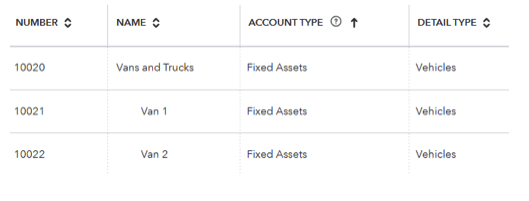
You can create as many subaccounts as necessary to meet the needs of your company. You can create a subaccount for Balance Sheet accounts (assets, liabilities, and owners equity), or P&L accounts (income and expenses). The subaccount numbers should follow the number structure of the parent account. In the above, The parent account above is number 10020, and the subaccount numbers are 10021 and 10022.
To create a new subaccount in QBO, Go to Settings (gear icon) > Chart of Accounts. Then select “New account”
The Lead Source Most Owners Overlook: Account Work
|
|
Joe Cruz Director National Accounts & Partnerships |
When leads start to slow down, many owners immediately pivot to paid marketing like Angi or eLocal. While these have their place, the most sustainable growth often lies in a category we tend to overlook: Account Work.
The ideal marketing mix targets 35% Accounts. This isn't just a number—it’s a strategy to generate consistent, high-volume work without the constant cost of lead acquisition.
The Ideal Marketing Mix
Your target strategy should be:
- 50% Local Paid Marketing
- 15% Repeat & Referral
- 35% Accounts
What Exactly is Account Work?
Account work isn't a one-size-fits-all category. It’s built on repeat business from three primary sectors:
- Property Management: Apartment complexes, HOAs, and light commercial properties.
- Facilities Maintenance: Hospitals, universities, airports, and national retail chains.
- Home Warranty Providers: Companies that dispatch service work for covered homeowner repairs.
When you build trust with these managers, you aren't just getting a one-time job; you're becoming their go-to partner for an entire portfolio of properties.
Success from the Field
The numbers prove that simply being "ready to deliver" pays off.
- Woodbridge, VA: Opened earlier this year and generated over $37,000 in February alone through HomeServe.
- Fairfield County, CT: Generated more than $95,000 in revenue with HomeServe last year.
The Home Warranty Playbook
Home warranty work requires a specific approach. While providers often cap what they pay for a repair (the "NTE" or Not-To-Exceed amount), it creates an opening for our technicians to shine. By presenting Best, Better, and Good options—and offering financing—we help homeowners manage necessary upgrades (like drip pans or shutoff valves) that aren't covered by the warranty. You aren't just a contractor; you’re a partner solving their problem.
Action Plan: Where to Start
You don't have to reinvent the wheel. The easiest opportunities are already waiting for you:
- Check ClickUp: Navigate to Marketing → National Customers. This contains a list of accounts we already work with and specific instructions on how to register.
- Target Growth Accounts: These are customers already being serviced by other locations in our system that are ready to expand.
- Get Local: Visit nearby commercial properties. A simple conversation asking who they use for facility management can lead to a vendor portal registration that pays off for years.
Reputation & Documentation
In this world, your reputation is your marketing. Accounts care about speed, following their specific processes, and clear documentation.
- NTE Transparency: If you need to exceed a cap, your estimate must be clear, accurate, and backed by photos.
- Keep Paperwork Fresh: Ensure your W9 and COI (Certificate of Insurance) are always up to date. Many accounts will stop dispatching work the moment a document expires without even notifying you.
Building a Culture of Excellence: The Power of Team Meetings, Education, and Accountability
In any high-performing organization, consistency is the bridge between vision and results. Whether you lead a service business, sales team, or franchise operation, the principles that drive success are universal—consistent communication, continual education, a strong cultural foundation, and active performance monitoring. Together, these form the backbone of healthy, sustainable growth.
1. The Role of Team Meetings: Align, Inspire, and Execute
Team meetings are not just administrative check-ins—they are strategic rituals. They provide structure, clarify priorities, and strengthen alignment across all levels of the organization.
- Communication & Clarity: Meetings ensure everyone is rowing in the same direction by realigning daily expectations with strategic goals.
- Engagement: Consistent meetings give every team member a voice, fostering ownership and inclusion.
- Accountability: Reviewing performance metrics in an open forum emphasizes transparency and reinforces standards without ambiguity.
A well-run meeting fuels motivation, not monotony. The goal is not to talk about work—it’s to equip your team to act with confidence and consistency.
2. Continued Education: Fuel for Progress
In fast-evolving industries, yesterday’s knowledge becomes today’s limitation. Continued education ensures that a team remains adaptable, competitive, and confident in delivering excellence.
- Skill Enhancement: Regular training sharpens technical ability and customer communication—the twin pillars of performance.
- Innovation & Adaptability: Ongoing learning keeps the team prepared to integrate new tools, systems, and approaches.
- Professional Growth: Education builds loyalty and purpose. When people feel invested in, they invest more of themselves back into the organization.
Organizations that neglect education risk complacency, while those who prioritize it create a culture of self-improvement.
3. Reinforcing Culture: The Compass for Behavior
Culture defines how people act when no one is watching. It dictates how employees treat customers, one another, and the company’s reputation. Reinforcing culture is not a one-time exercise—it’s a daily discipline.
- Leadership by Example: Culture starts at the top. Leaders must model the behaviors they expect to see replicated across the team.
- Rituals & Recognition: Celebrate actions that reflect company values. Recognition reinforces priorities far more effectively than policy.
- Consistency: Every conversation, meeting, and coaching moment must reinforce cultural messages—safety, service, integrity, and excellence.
A strong culture simplifies decision-making; when the “why” is clear, the “how” follows naturally.
4. Upholding Standards: The Framework for Excellence
Standards transform expectations into measurable practices. They define quality, guide training, and set the benchmarks for success.
- Define Non-Negotiables: Identify what “right” looks like in every role—from customer interactions to technical protocols.
- Document Processes: Ambiguity breeds inconsistency. Clarity in standard operating procedures ensures repeatable outcomes.
- Enforce Fairly: Holding teams to standards isn’t about punishment—it’s about promoting professionalism and pride in performance.
By maintaining clear standards, leaders create predictability—the foundation for trust and operational excellence.
5. Monitoring Team Performance: Data Builds Direction
Performance tracking is the mirror that reflects the truth of execution. Monitoring results enables leaders to recognize strengths, identify gaps, and act before small issues grow into systemic challenges.
- Measure What Matters: Focus on key metrics that define success—conversion rates, customer satisfaction, repeat business, and recall rates.
- Coach in Real Time: Feedback delayed is improvement denied. Monitor performance proactively and follow up personally.
- Celebrate Wins: Highlight achievements; what gets celebrated gets repeated.
When handled with transparency and consistency, monitoring performance strengthens alignment and accountability while empowering high performers to excel further.
The Takeaway: Excellence Is a Habit, Not a Happenstance
Success is not built on isolated initiatives—it’s the byproduct of consistent habits across communication, education, culture, standards, and measurement. A team that meets regularly, learns continuously, honors its culture, upholds its standards, and tracks performance with integrity is a team that thrives.
By treating these practices not as obligations but as opportunities, leaders cultivate a high-trust, high-performance environment—one where excellence isn’t enforced; it’s expected.